


Your First Encounter with a Smoky Mountain Black Bear
There’s nothing quite like seeing a black bear in the wild. If you’re planning a trip to the Smokies, chances are you’re hoping to spot one — and maybe even photograph it. Black bears are one of the most iconic animals in Great Smoky Mountains National Park, and for many visitors, seeing one is a highlight of the trip. They represent the wild, untamed spirit of these mountains and are an unforgettable part of the experience.
Before you set out to photograph black bears in the Smoky Mountains, it helps to know what to expect. These animals may look calm or curious at a glance, but they are strong, fast, and unpredictable. Keeping your distance and respecting their space is essential — not only for your safety, but for theirs. A good photo should never come at the expense of the bear’s well-being.
How to Approach Photographing Black Bears in the Smoky Mountains
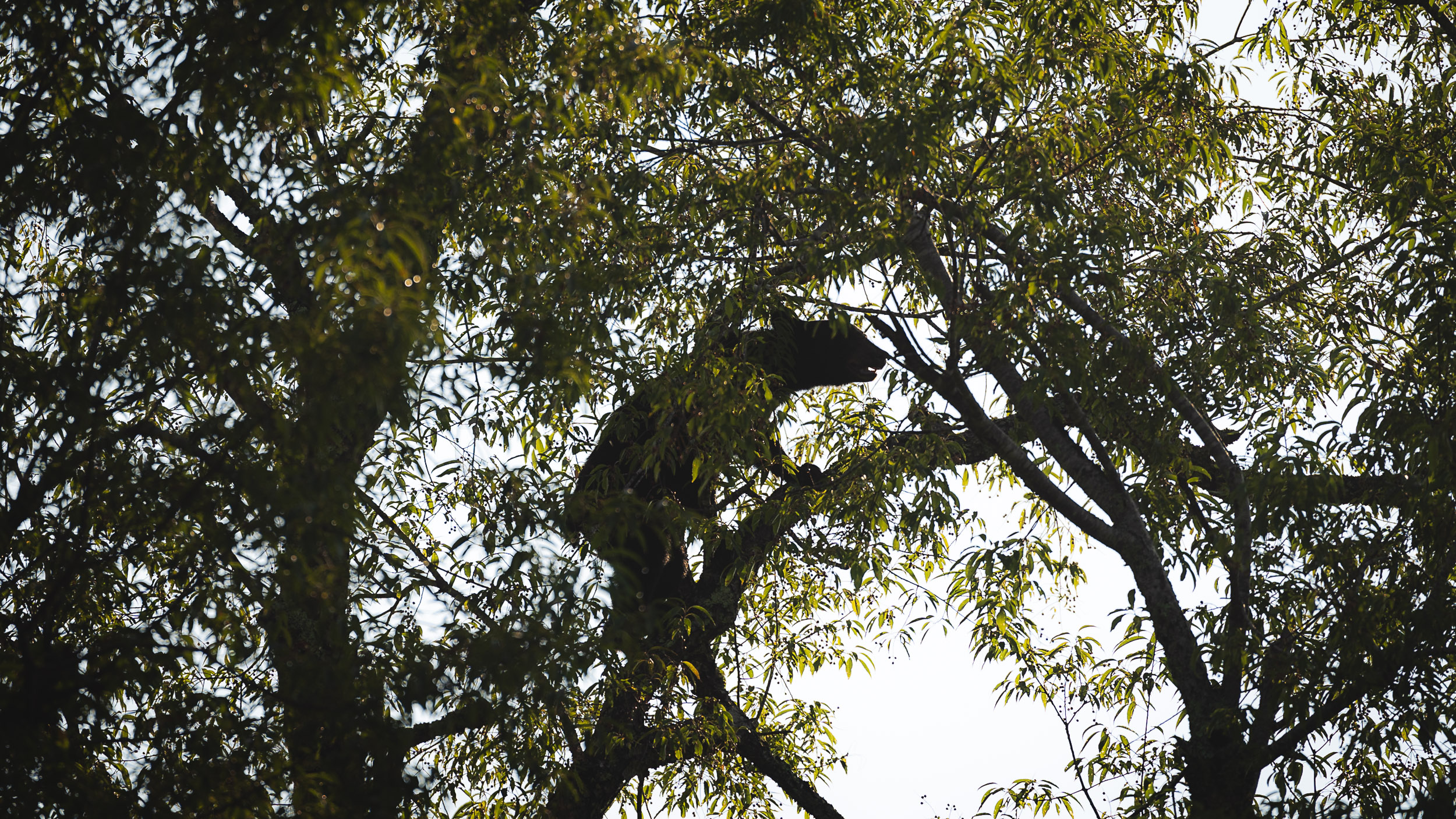
If you’re preparing to photograph black bears in the Smoky Mountains, it’s important to know that wildlife photography is as unpredictable as the animals themselves. Even with the best planning, there may be times when you don’t spot any bears during your trip. This unpredictability is part of what makes every sighting special and memorable.
Understanding black bear behavior is essential for both increasing your chances of a successful encounter and ensuring safety for you and the bears. Black bears follow seasonal feeding patterns and behaviors that influence where and when they can be seen. Learning these habits helps you track bears effectively without disturbing their natural routines.
By deepening your knowledge of bear behavior and combining it with respectful observation, you can prioritize safety, minimize your impact, and increase your chances of capturing truly stunning wildlife photos.
Choosing the Right Gear for Photographing Black Bears
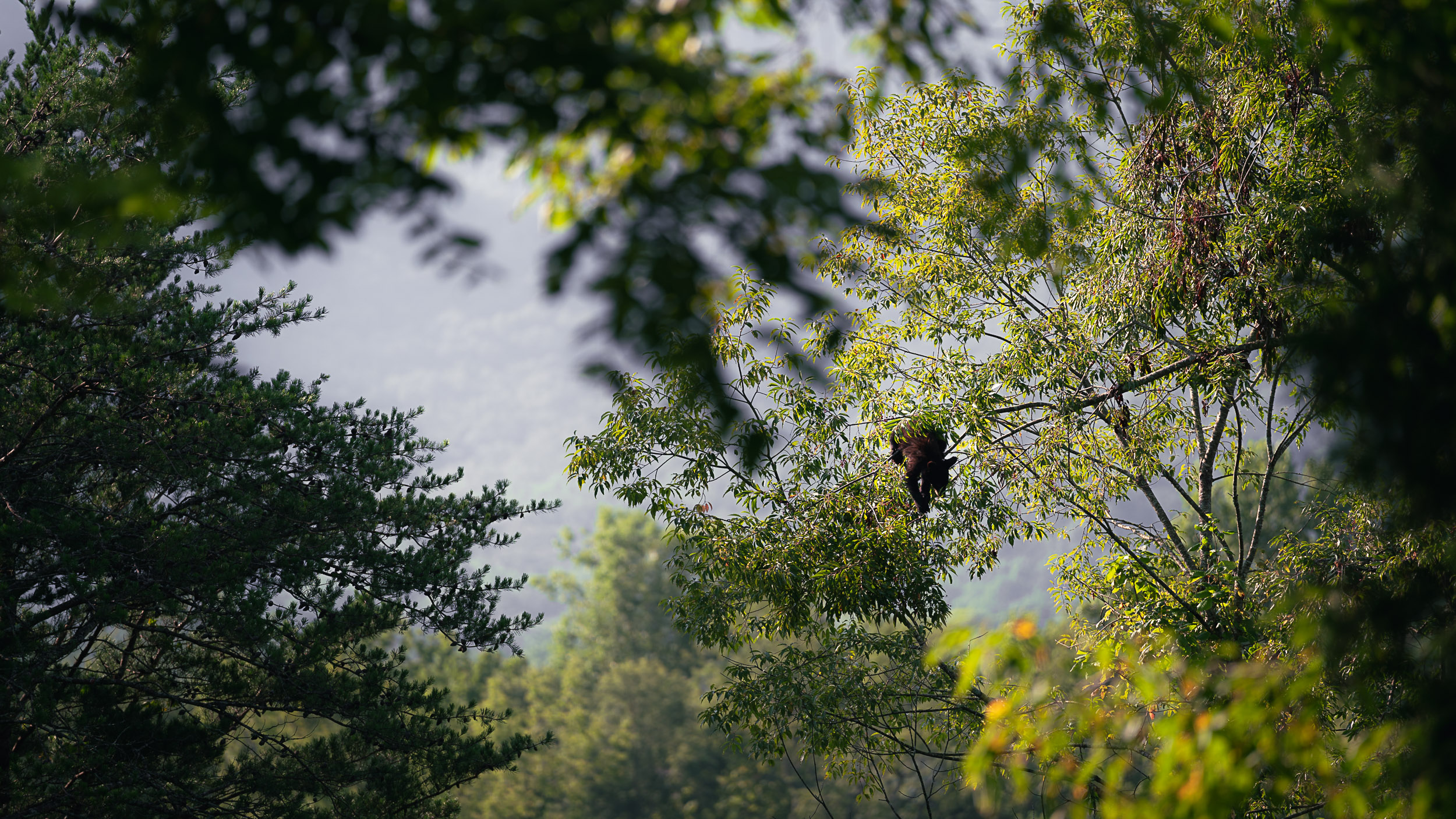
Using the proper photography equipment is key to photographing black bears safely and effectively. For me, I use a Sony A7C with a full-frame sensor, which captures plenty of detail and lets me crop in on bears during post-editing without losing quality. I pair this with a Sony 70-200mm G II lens, which allows me to shoot from a safe distance while still getting sharp, clear images.
Even with a 200mm lens, photographing black bears can be challenging. If you can invest in a longer zoom lens, that’s ideal—aiming for a focal length anywhere between 200mm and 800mm gives you a lot more flexibility and safer shooting distance.
For those on a budget, there are excellent third-party lens options from manufacturers like Tamron and Sigma. These brands offer high-quality zoom lenses at more affordable prices, often with focal lengths suitable for wildlife photography. Additionally, lens extenders can be a cost-effective way to increase your reach without breaking the bank.
Best Locations to Photograph Black Bears in the Smoky Mountains
If you want to photograph black bears in the Smokies, here are the top spots you should know about:
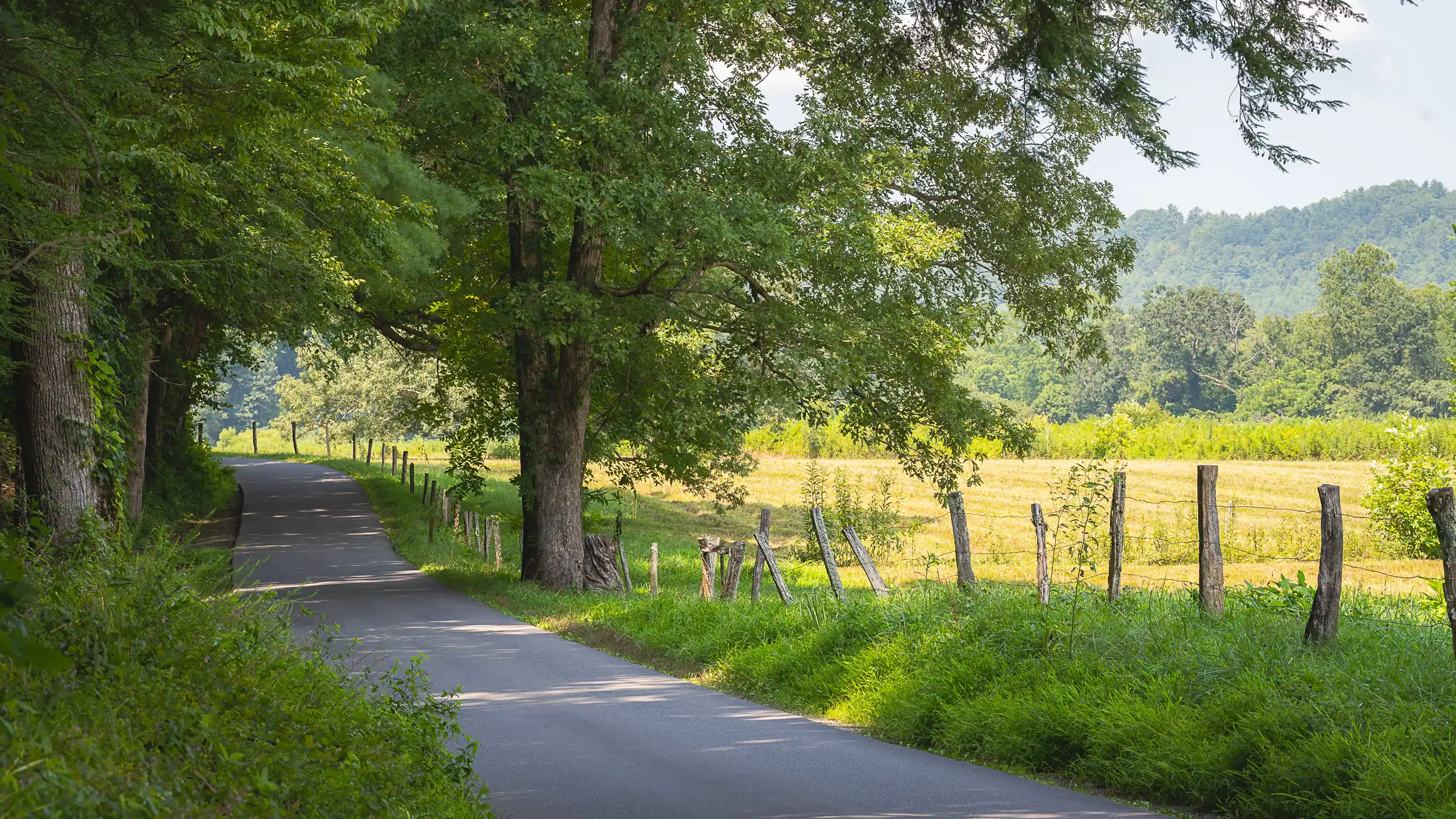
- Cades Cove
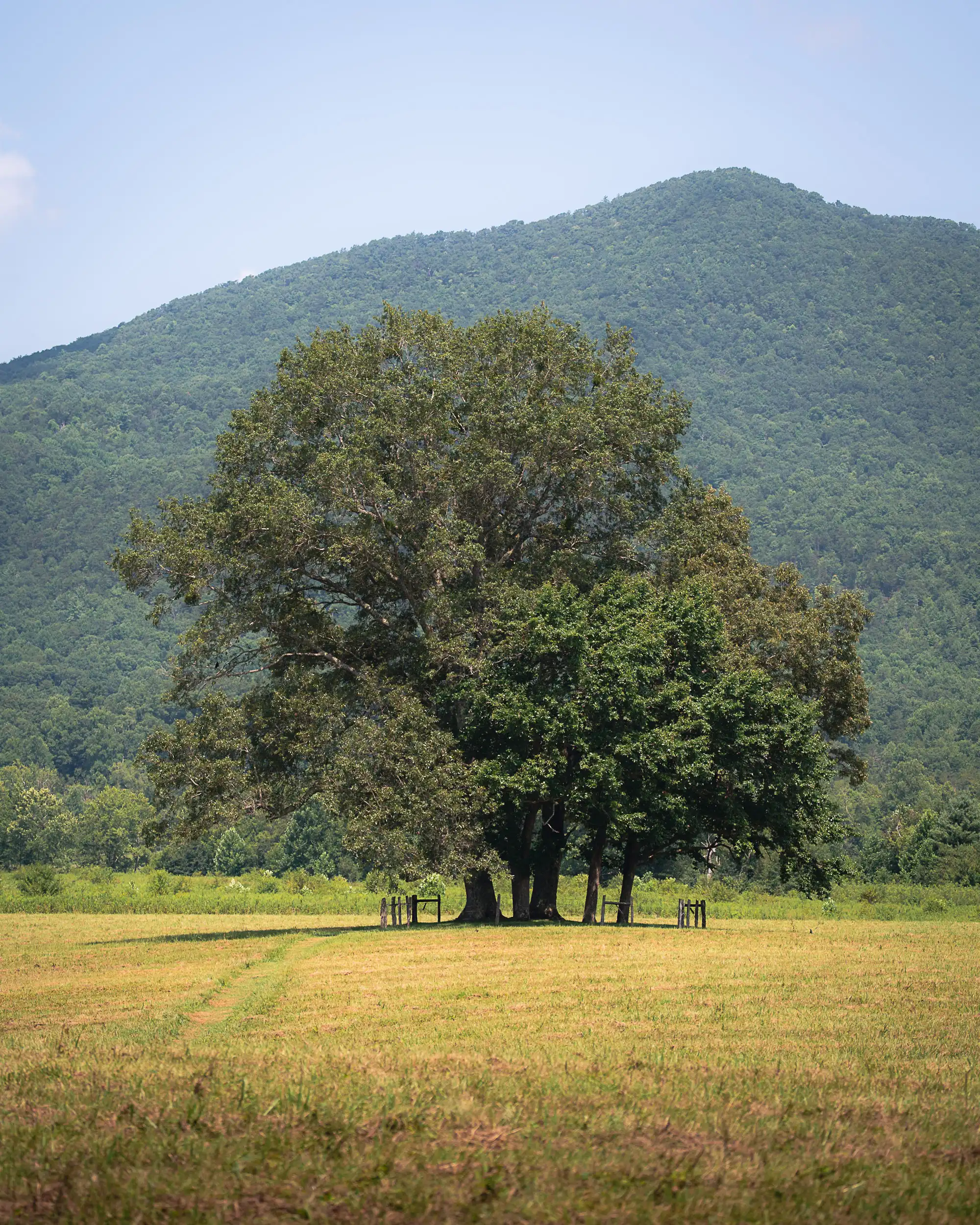
The most popular and reliable place to spot black bears. This beautiful valley has open fields, forest edges, and plenty of food that attracts bears, especially during feeding season. Early mornings and evenings are prime times here. - Roaring Fork Motor Nature Trail near Gatlinburg
A scenic one-way loop drive known for wildlife sightings, including black bears. Keep your eyes peeled along the trail, especially near historic cabins and forested areas. - Other Notable Spots
- Cataloochee Valley: A quieter alternative with fewer visitors and regular bear sightings.
Quick Tips for Success When Photographing Black Bears
• Visit during early morning or late evening
Black bears are most active during dawn and dusk, especially in the warmer months. The soft light during these times also makes for better photos, with less harsh contrast and more depth in your images. If you’re in Cades Cove, consider starting your loop right at sunrise — not only do you beat the crowds, but you’ll also catch wildlife just starting their day.
Bears follow seasonal food cycles, which heavily influence their movement and visibility.
• Learn bear feeding habits by season
- In spring, bears emerge from hibernation and forage for fresh plants, grasses, and insects.
- In late summer and fall, they shift focus to high-calorie foods like berries, black cherries, and acorns, often staying active for long hours to fatten up before winter.
Knowing what they’re feeding on (and where) helps you anticipate where they’ll be. For an excellent breakdown of bear behavior by season, check out:
🔗 BearWise: Yearly Bear Behavior Guide
• Check recent bear activity before your trip
The National Park Service often shares updates on wildlife activity, trail closures, or high bear traffic areas. Before heading out, it’s smart to visit the official GSMNP site or stop by a local visitor center to ask about current conditions.
🔗 Great Smoky Mountains National Park – Bear Safety Info
Staying Safe Around Black Bears: What You Need to Know
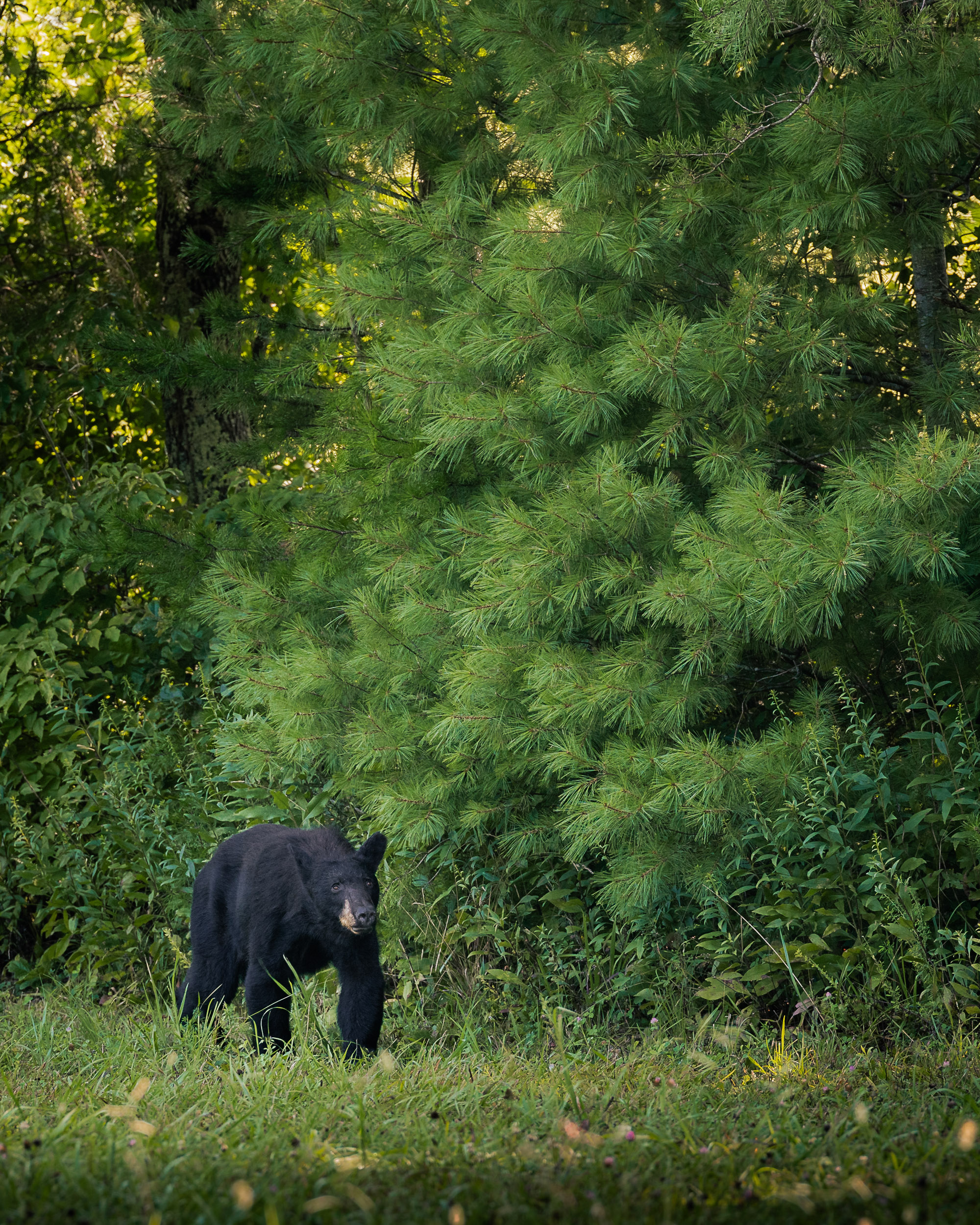
Here’s what I’ve learned from my time photographing black bears in the Smoky Mountains:
1. Keep a Respectful Distance
Always stay at least 50 yards (150 feet) away from black bears. It’s tempting to get closer for that perfect shot, especially with a zoom lens, but this distance is the law. Breaking it could result in fines or even arrest.
2. Carry Essential Bear Safety Gear
I always bring bear spray and a bear bell. The spray is a last resort but a vital tool to have. The bell helps alert bears to your presence from a distance so you don’t startle them unexpectedly.
3. Manage Food and Trash Properly
One quote that sticks with me is: “Remember, a fed bear is a dead bear.” Securing all your food and trash in bear-proof containers or inside your vehicle is non-negotiable. If you’re careless with food or litter, you could be responsible for a bear’s death.
4. How to Handle a Persistent Bear
If a bear starts following or approaching you, stay calm and follow these National Park Service recommended steps:
- Try changing your direction.
- If the bear keeps following, stand your ground.
- As it gets closer, raise your voice—yell or shout—and make yourself look as big as possible, especially if you’re with others.
- Throw non-food objects like rocks to scare it off.
- Be ready to use your bear spray if the bear is within about 20 yards.
- Never run, turn your back, or leave food behind.
Wrapping Up: Your Black Bear Photography Journey Starts Here
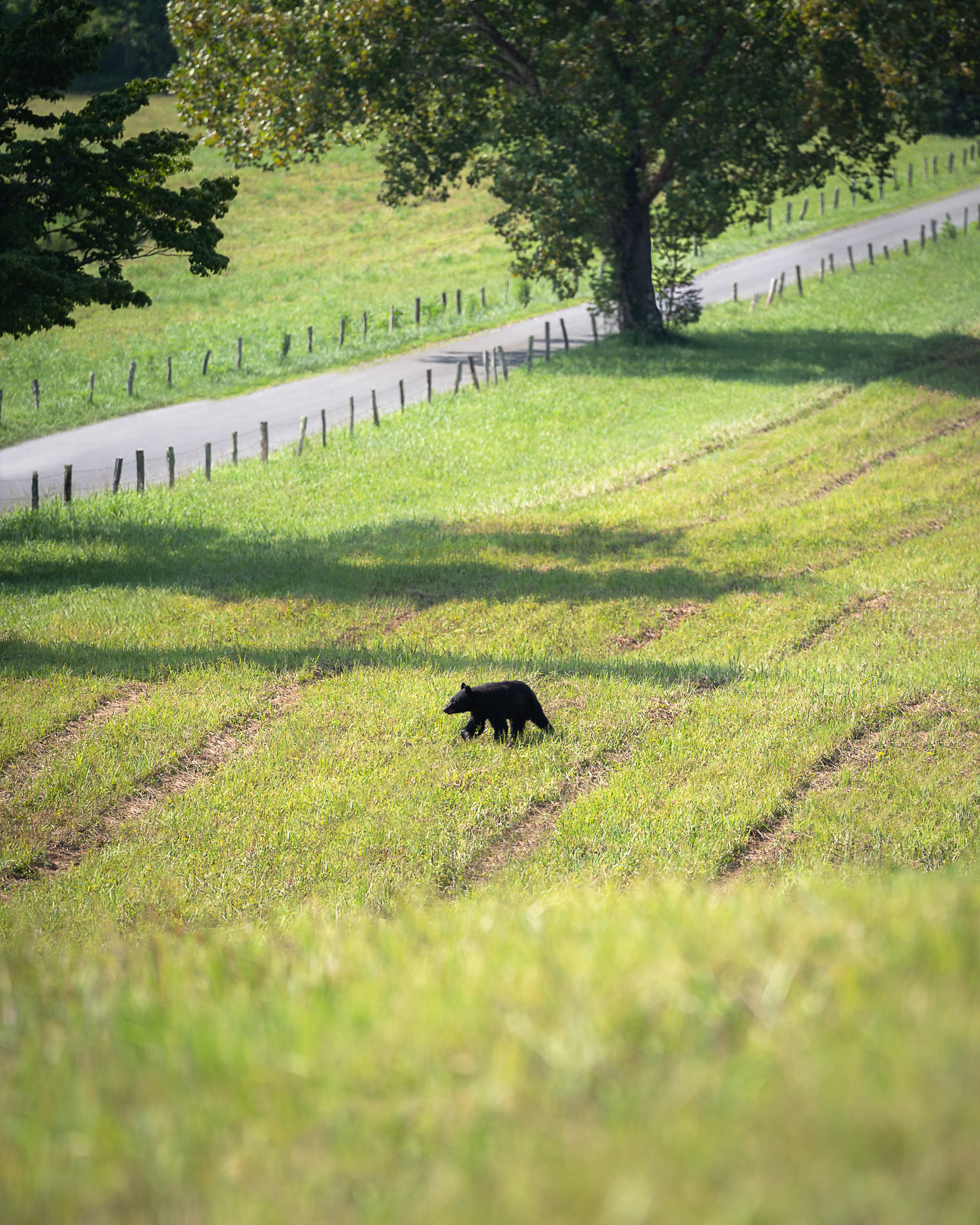
Photographing black bears in the Smoky Mountains is an unforgettable experience. It’s not just about getting the perfect shot. It’s about showing up prepared, staying aware, and respecting the wild for what it is.
If you’re planning your first bear photography trip and wondering how to photograph black bears in the Smoky Mountains safely and respectfully, I hope this guide gives you a strong starting point. The more you understand about where to go, how bears behave, and what gear can help you keep your distance, the better your chances for a meaningful and responsible experience.
While you’re in the area, consider making time to explore more of the park. One of my favorite after-dark spots is Clingmans Dome. If you’re interested in capturing the night sky or just soaking in the view, check out my guide to stargazing at Clingmans Dome for everything you need to plan your visit.
Wherever your lens takes you next, I hope your journey is safe, respectful, and full of moments that remind you why you fell in love with nature in the first place.🐾🐻
You might also like

Leave A Reply
[…] Honestly, there is no way to be certain. That said, always keep bear spray on you just in case. I have seen them myself, but it really comes down to luck. My advice is to hike without expecting to see one so you will not be disappointed if you do not. If your goal is seeing bears, I have a whole post dedicated to spotting them here: Black Bears in the Smoky Mountains […]